Some of the most extraordinary gems ever found belong to a rare class of diamonds known as CLIPPIRs (Cullinan-like, Large, Inclusion-Poor, Pure, Irregular, Resorbed). They make up less than 1% of all diamonds on Earth, and include three of the largest diamonds ever recovered, the Cullinan, at 3,106 carats, found at the Premier mine in South Africa; the 1,111 ct Lesedi La Rona, discovered at the Karowe mine in Botswana in 2015 and sold for US$53 million in 2017; and the 2,492 ct Motswedi recovered from the Karowe mine in 2024.
CLIPPIRs are not ordinary diamonds. They are part of a group known as “superdeep” diamonds that form more than 400km beneath our feet in a region of Earth’s deep interior called the mantle transition zone. This is much deeper than ordinary gem-quality diamonds, which usually form in the thick, rigid mantle roots beneath old continents, at depths of up to about 200km. The mantle is the thick layer of hot rock between Earth’s core and outer “shell” known as the crust.
Although their size and value attract attention, our interest in CLIPPIR diamonds lies in the journey they record. Because they originate at depths far beyond our reach, diamonds are valuable for understanding parts of Earth’s interior that we cannot directly observe. CLIPPIRs are especially rare messengers from the deep mantle. Studying them is one of the few ways we can learn how rocks and carbon are recycled in the Earth’s deep interior, and how our planet reshapes itself over hundreds of millions of years.
As a geologist at the University of Cape Town, I specialise in the magmas that carry diamonds to the surface, known as kimberlites. My colleagues and I set out to investigate what the world’s largest diamonds could tell us about Earth’s hidden recycling system – specifically, what rocks hosted these rare diamonds, and how they were eventually brought to the surface.
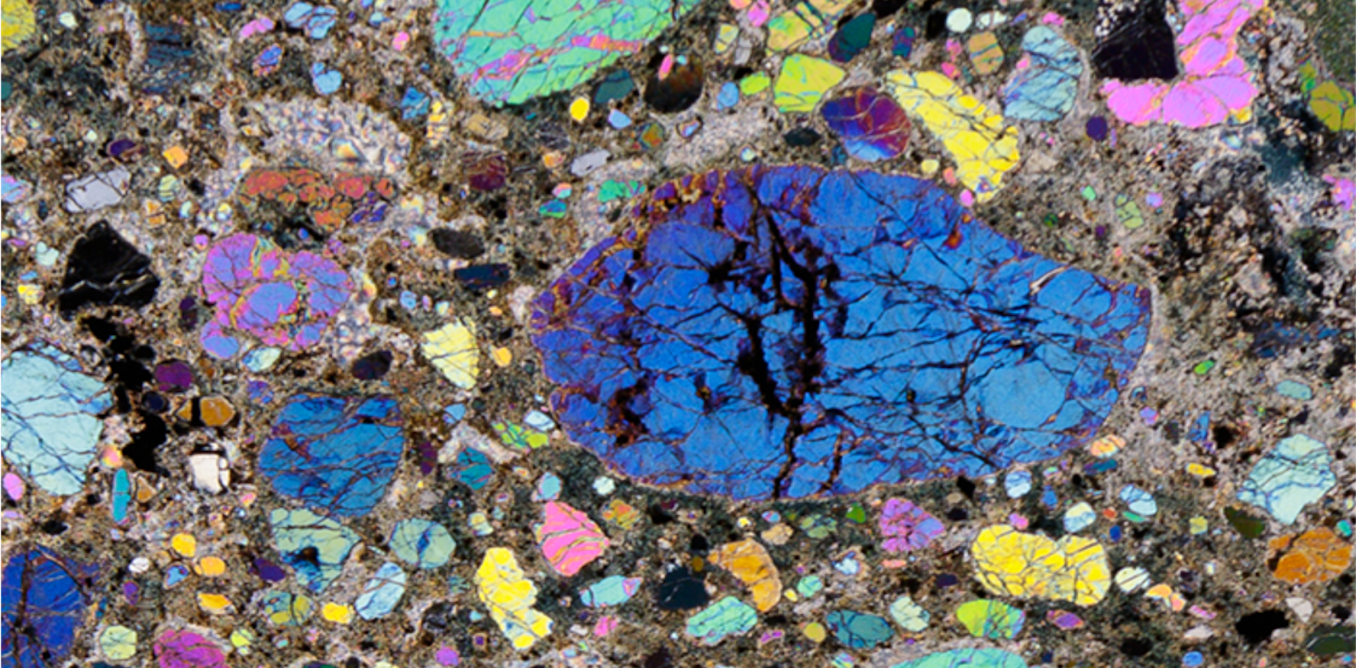
We explored these questions by focusing on olivine, a mineral found in kimberlite rocks. Kimberlites are rare magmatic rocks that rise rapidly from deep within the Earth, acting like natural elevators that carry diamonds and other minerals from the mantle to the surface.
Olivine is the most abundant mineral in the mantle. As kimberlite magmas rise, they pick up olivine from the mantle rocks they pass through. The chemistry of this olivine gives us a fingerprint of those deep rocks, including clues about their iron content and oxygen isotope signatures. This helps us understand the mantle regions that kimberlites sampled, including the areas where diamonds may have been stored before being brought to the surface.
But CLIPPIR diamonds have been found in only a small number of kimberlites globally, and we still do not fully understand why some kimberlites contain these exceptional diamonds while most do not.
Our findings add new pieces of the puzzle. We identified unusual iron-rich domains in the mantle associated with the kimberlites that contain CLIPPIR diamonds. This gives us new clues about the rocks that hosted these diamonds before they were carried to the surface. Our findings also offer a practical tool for diamond exploration because kimberlites containing abundant iron-rich olivine and related minerals have higher potential to host CLIPPIR diamonds.
Journey through the deep Earth
Previous studies had shown that CLIPPIR diamonds formed far deeper than ordinary diamonds. Their chemistry also suggested a link to ancient seafloor rock, known as oceanic crust, that was dragged deep into the Earth by plate tectonics – the slow movement and interaction of sections of Earth’s rigid outer shell. When two plates meet, one can be forced beneath the other. This process, called subduction, carries oceanic crust deep into the mantle, where it is changed by heat, pressure and interaction with the surrounding rocks. Under these extreme conditions, carbon contained in this material can be transformed into diamond.
New evidence from our analysis of olivine chemistry suggests that CLIPPIR-bearing kimberlites are linked to a particular kind of recycled material: ancient basaltic oceanic crust that had been altered by hot fluids circulating through the seafloor before it was dragged deep into the Earth. This hydrothermally altered oceanic crust appears to have formed dense, iron-rich rocks in the deep mantle.
This finding addresses one of the unresolved questions about CLIPPIR diamonds: what kind of rocks hosted them before kimberlite magmas carried them to the surface?
But our findings also raise another question. These iron-rich rocks are so dense that they cannot rise back towards Earth’s surface on their own. Earlier theories suggested that the rock hosting these diamonds could float upwards passively through the mantle. Our results suggest that the journey was probably more complicated.
Instead of rising passively, this dense, iron-rich material would have needed a powerful lift. One possible mechanism is mantle plumes: columns of superheated rock that rise from deep within the Earth and can capture dense material, forcing it upward. These upwellings could have carried the diamond-bearing material upwards until it became stored at the base of the lithosphere, the thick, rigid root beneath old continents, where it likely remained for hundreds of millions of years.
Much later, rare magmas generated deep within the Earth passed through these diamond-bearing regions. These magmas rose rapidly to the surface and solidified as kimberlite rocks, carrying the diamonds and associated minerals with them.
In other words, CLIPPIR diamonds are not only rare and valuable gems. They record a long geological journey: from ancient seafloor, to deep mantle, to the roots of continents, and finally to the surface in rare volcanic eruptions.
Finding more CLIPPIR diamonds
Our findings may also help guide diamond exploration.
In parts of Africa, including Sierra Leone and Angola, very large CLIPPIR diamonds have been found in river gravels. These diamonds must have come from primary source rocks, such as kimberlites, but in many cases those sources remain unknown. Rivers can transport diamonds far from where they originally erupted, making it difficult to trace them back to the rocks that brought them to the surface.
The famous Star of Sierra Leone, for example, was a 969-carat diamond recovered in 1972 from river deposits in the Kono district. Yet decades of mining in the region did not clearly identify a kimberlite source for diamonds of this type. More recently, CLIPPIR diamonds have been recovered from the Meya kimberlite in the same district, showing that primary sources for these exceptional diamonds do exist there.
Our approach gives exploration teams a new clue to look for. Kimberlites containing abundant iron-rich olivine and related minerals have higher potential to host CLIPPIR diamonds. This does not guarantee that giant diamonds will be found, but it helps geologists decide which kimberlites are worth investigating in more detail.
Based on our findings, we would expect the most promising kimberlites in regions such as Sierra Leone and Angola to be those that show this iron-rich chemical signature. There are still many poorly characterised kimberlites in these areas, and some may be hiding more of the world’s rarest diamonds.
The world’s largest diamonds have travelled through Earth for hundreds of millions of years. By reading the chemical clues preserved in the rocks that brought them to the surface, we are beginning to understand not only where these diamonds may be found, but what they reveal about the deep processes that shape our planet.