
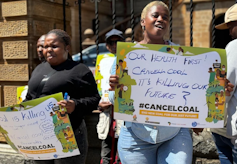
Over the past 10 years South Africa has made a number of promises to tackle climate change. These have included its first pledge to reduce greenhouse gas emissions in 2016, a stronger target to reduce pollution in 2021 and a new climate law in 2024.
The country has now promised to further reduce its greenhouse gas emissions by 2035, while protecting jobs, supporting economic development and moving towards cleaner energy.
But is this enough?
In 2025, the International Court of Justice in the Hague issued advice on what governments of the world must do to prevent further climate change. South Africa participated in these proceedings. The court was very clear that simply announcing plans to reduce greenhouse gas emissions was not enough. Countries must also prove that they’ve taken steps to prevent present and future significant environmental harm.
Historic climate change ruling from the International Court of Justice: what it means for Africa
South Africa’s latest climate pledge is set out in its Second Nationally Determined Contribution. The nationally determined contributions are technical plans and pledges by each country, stating exactly how much they will reduce greenhouse gas emissions. The plans also set out how countries will adapt to the impacts of climate change.
We are legal scholars working on climate change, renewable energy, rule of law and human rights. We compared what South Africa has promised in its latest pledge to do about climate change with what the International Court of Justice says governments are legally required to do to protect people and the environment.
South Africa’s new climate targets: balancing ambition with the realities of coal and climate finance
Our research found that South Africa has moved beyond making promises by setting specific climate targets and putting laws in place to help achieve them. However, more still needs to be done. The country continues to depend on burning coal to generate over 70% of its electricity. This raises questions about whether South Africa can meet its own commitments to reduce greenhouse gas emissions.
The country is also dependent on loans and grants (international climate finance) to move away from coal to green energy.
Courtesy African Climate Alliance
Climate pledges can now serve as important measures of government accountability. South Africa’s second climate pledge gives people a way to hold the government accountable. By setting targets for 2035, the government has made promises that can be checked against the actions it takes to reduce emissions.
South Africa is moving away from coal – how mines and power stations could be used for green energy and farming
But the issue is not simply what South Africa has promised, but whether it is taking the necessary steps to deliver.
South Africa must, therefore, put its climate laws into practice, reduce its dependence on coal and regularly report on its progress towards meeting the 2035 emissions targets.
South Africa’s climate promises need stronger action
The International Court of Justice made it clear that governments must back their climate promises with action and protect people’s rights. Countries must aim for their highest possible emissions cuts, taking national circumstances into account, and enforce climate laws or introduce new ones where needed. South Africa participated in the International Court of Justice’s climate proceedings, where the court clarified governments’ duties to tackle climate change.
South Africa’s second climate pledge aims to limit greenhouse gas emissions to between 320 million and 380 million tonnes by 2035. The difference of 60 million tonnes is huge, roughly equal to the carbon dioxide released by 13 million petrol cars driven for a year. If South Africa emits 380 million tonnes, it will be off course in meeting the global goal of limiting warming to 1.5°C. Reaching the lower end of the target would bring the country closer to that goal.
South Africa’s coal workers face an uncertain future – Mpumalanga study flags they’re being left out of the green transition
South Africa depends on coal for electricity and jobs, particularly in the province of Mpumalanga. But sticking with coal could put its climate targets out of reach. The International Court of Justice recognised that poorer countries have fewer resources to cut emissions. South Africa must protect jobs and electricity supplies as it moves away from coal, but cannot use these concerns to delay action indefinitely.
South Africa has a constitution and law protecting people’s right to a healthy environment and requiring action on climate change.
South African court said no to new coal-fired power: what’s behind the ruling
However, when the government brought the Climate Change Act into force in 2025, it delayed the date when some provisions would become legally binding. These included clauses that cover how to prepare for climate impacts, funding and government responsibilities, as well as some emissions requirements.
South African courts have already demonstrated that environmental duties can be enforced. In a case brought by environmental justice NGO Earthlife Africa, the court ruled that before the government gives the go ahead to new coal-fired power stations, it has to properly consider the negative future effect of this on climate change. In another case about air pollution and health, the High Court found that failures to address serious air pollution violated constitutional environmental rights.
What needs to happen next?
At COP31, South Africa should explain how it plans to meet its 2035 emissions targets. It also needs to use the global meeting to get support for cleaner energy and protect workers and communities affected by the move away from coal.
Outside COP31, the government must show that it is making serious efforts to meet the emissions targets it has set itself.
Our research identifies three priorities:
-
South Africa must put its climate laws into practice by setting clear emissions limits for major polluters. It must require different sectors of the economy to make bigger cuts in emissions, with clear deadlines. Government institutions must track progress and report on whether these targets are being met.
-
Energy planning must show that it supports the country’s climate targets. Reducing coal dependence requires investment in cleaner energy. This needs to come with practical protection for coal workers and communities, such as new jobs in green energy.
End of coal in South Africa: what 100,000 workers will need when their jobs go
- Climate action must protect people’s rights to health, water, food and a safe environment. Communities facing droughts, floods and pollution must have a say in decisions that affect them. They need practical support, such as reliable water supplies and flood protection. Workers and communities affected by the shift away from coal need access to training, new jobs and affordable electricity.
South Africa’s second climate pledge is an important step forward, but its effectiveness depends on implementation. The country’s future climate pledges should set stronger and clearer emissions reduction targets, involve the public in climate decisions and give greater protection to people affected by climate change.