Researchers across the UK will tackle some of the most pressing risks facing human, animal and plant health, working with international research experts.
Projects range from improving preparedness for future disease outbreaks to developing mRNA vaccines for livestock and tackling the growing threat of antimicrobial resistance (AMR).
Scale of the threat
The scale of these threats is already clear.
Around one in six laboratory-confirmed bacterial infections worldwide were resistant to antibiotics in 2023, while ash dieback alone is estimated to cost Britain around £15 billion.
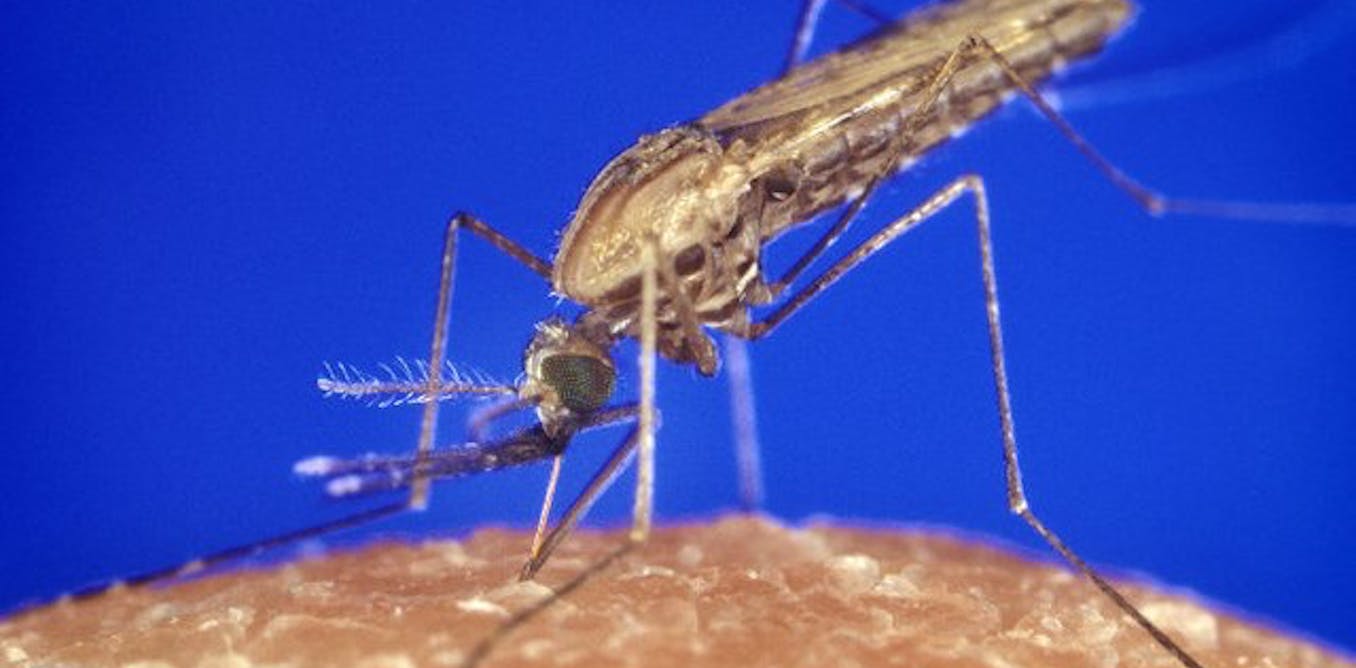
Invasive mosquitoes also pose a growing threat, with mosquito-borne diseases, including dengue, Zika and chikungunya costing at least $94.7 billion globally between 1975 and 2020.
18 new research and innovation projects
A coalition of UK government partners is investing more than £54 million through 18 new research and innovation projects.
This public investment is coordinated through UK Research and Innovation (UKRI), with co-funding from partners, including:
- Department for Environment, Food and Rural Affairs (Defra)
- Foreign, Commonwealth and Development Office (FCDO)
- Department of Health and Social Care (DHSC)
These programmes aim to strengthen our ability to prevent, detect and respond to biological threats affecting people and their livelihoods, wildlife and ecosystems.
Tackling complex challenges
Researchers will work with international partners, taking an approach that recognises the links between human, animal and environmental health, and draws on multiple disciplines to tackle complex challenges in a rapidly changing world.
Together, the programmes will help:
- build resilience against emerging biosecurity threats
- strengthen prevention and response capabilities
- enhance food security
- support sustainable economic growth
Delivering government priorities
UKRI Executive Champion for Tackling Infections and Biotechnology and Biological Sciences Research Council Executive Chair, Professor Anne Ferguson-Smith, said:
This investment reflects UKRI’s central role in delivering government priorities and our long-standing commitment to convening and working with partners across government to fund vital One Health research into human, animal, and plant health.
By pooling expertise from across the research and innovation ecosystem in the UK and globally, we can tackle related infectious disease challenges in a more coordinated way to get ahead of emerging biological threats and help protect people, animals, plants and the environment, both in the UK and internationally.
Ultimately, it will advance knowledge, improve lives, and drive growth.
Investing in cutting-edge research
UK Chief Veterinary Officer, Christine Middlemiss, said:
Investing in cutting-edge research across animal, plant and human health is vital to strengthening our national biosecurity, ensuring we are prepared for future disease threats and able to respond rapidly when they emerge.
These projects, supported by funding from Defra, will drive innovation in next-generation veterinary vaccines, strengthen epidemic preparedness and help tackle the growing threat of antimicrobial resistance.
Reducing impact
FCDO Chief Scientific Adviser, Professor Sir John Edmunds, said:
FCDO is pleased to co-fund these innovative research projects.
They will make a real difference to understanding and managing emerging diseases and reducing their impact for vulnerable people and their livelihoods, including in humanitarian responses.
A One Health approach
Chief Scientific Adviser at DHSC and Chief Executive Officer of the National Institute for Health and Care Research (NIHR), Professor Lucy Chappell, said:
In our interconnected world, we must recognise that the health of humans, animals, and the wider environment are inherently linked and interdependent.
Similarly, diseases don’t respect borders, and countries must work together to address our greatest health threats.
DHSC is pleased to co-fund these important research projects.
By taking a One Health approach and bringing together experts from the UK and around the world, we can identify threats earlier, strengthen resilience, and deliver better health outcomes for the public.
Highlighted projects
How diseases emerge and spread
One of the projects is Professor Kavita Vedhara of Cardiff University’s project. It will investigate how the interactions between human behaviour, social settings and public trust influence how diseases emerge and spread.
This will help develop new ways to predict, prevent and prepare for future outbreaks.
Accelerating vaccine development for future disease threats
Professor Jonathan Heeney of the University of Cambridge will use artificial intelligence to create plug-and-play vaccine antigens against animal and zoonotic pathogens.
This will help accelerate vaccine development for future disease threats.
Withstanding tree disease epidemics
Dr Laura Kelly of Royal Botanic Gardens, Kew will develop new ways to help the UK’s forests and landscapes withstand tree disease epidemics, such as ash dieback.
This will help where threats cannot be prevented or eradicated.
Assessing the risk of disease outbreaks
Professor Francesco Checchi of the London School of Hygiene & Tropical Medicine will develop better ways to assess the risk of disease outbreaks during humanitarian crises.
This will help organisations anticipate how epidemics could develop and respond more effectively.
Developing next-generation vaccine platforms for animal health
Professor Simon Graham of The Pirbright Institute will develop next-generation mRNA vaccine platforms for animal health.
This will build technologies that could enable faster responses to emerging livestock diseases and reduce economic impacts on farmers and food producers.
Tackling AMR
Several projects will tackle AMR across food, farming and environmental systems, including:
- reducing inappropriate antibiotic use
- addressing airborne fungal resistance
- supporting antimicrobial stewardship in agriculture and aquaculture
Respond to future biological threats
The funding will generate new knowledge, tools and technologies that improve the UK’s and international capacity to prevent and respond to future biological threats.
The research is expected to support:
- earlier detection of emerging risks
- better evidence for policy and decision-making
- new approaches to reducing AMR
- faster, more adaptable vaccine and other innovative technologies
The projects will bring together expertise from biology, public health, social science, artificial intelligence, environmental research, and veterinary science to:
- strengthen the UK’s research and innovation ecosystem
- build transdisciplinary capabilities
- foster partnerships between academia, government, industry and international collaborators
By investing in capabilities critical to national resilience, the programme will help safeguard health, strengthen food and nutrition security, and protect the natural systems on which people and economies depend.
Further information
Funded projects
Epidemic prepardness
Related funding opportunity: interdisciplinary research to tackle epidemic threats (total budget £25.6 million, co-funded by UKRI, FCDO and Defra).
Trust, transmission and place: enhancing epidemic preparedness through an improved understanding of behaviour and social settings
Project lead: Kavita Vedhara
Research organisation: Cardiff University
ADAPTREE: integrating tree adaptation and manager learning to improve epidemic preparedness
Project lead: Laura Kelly
Research organisation: Royal Botanic Gardens Kew
TACKLING MBU: tackling the rise of mosquito-borne viral epidemics in Eastern Africa: from understanding to evidence-based control
Project lead: Catherine Walton
Research organisation: The University of Manchester
A data-driven approach to understanding, predicting, and preventing African swine fever in the UK and Southeast Asia
Project lead: Peter J Dodd
Research organisation: The University of Sheffield
Quantitative epidemic risk assessment in humanitarian responses
Project lead: Francesco Checchi
Research organisation: London School of Hygiene & Tropical Medicine
West Africa, West Indies, West London: unpicking nature, nurture, and environment to guide epidemic responses
Project lead: David LV Bauer
Research organisation: The Francis Crick Institute
Preparing for and mitigating the impacts of environmental change on Dipteran-borne disease in the UK
Project lead: Heather Ferguson
Research organisation: University of Glasgow
E-Prep II: single and combined bacterial infections across multiple cropping systems: risks, preparation and mitigation
Project lead: James Bell
Research organisation: Keele University
AMR
Related funding opportunity: transdisciplinary research to tackle antimicrobial resistance: full application (total budget £15.5 million, co-funded by UKRI, DHSC and Defra).
AMAST phase two: cultivating mindsets and practices for antimicrobial stewardship in agrifood systems
Project lead: Matthew Gilmour
Research organisation: Quadram Institute
A One Health systems approach to improve antibiotic stewardship and diplomacy in freshwater aquaculture.
Project lead: Margaret Crumlish
Research organisation: University of Stirling
EMOTIVE-AMS: emotion-informed messaging to optimise prescribing and tackle inappropriate veterinary and human antibiotic use in the community
Project lead: Sarah Tonkin-Crine
Research organisation: University of Oxford
Co-selection of Antimicrobial Resistance by Metals Alliance (CARMA)
Project lead: Shiranee Sriskandan
Research organisation: Imperial College London
CLEAN-AMR: community-led environmental approaches for AMR mitigation and reduction
Project lead: Esther van Kleef
Research organisation: University of Oxford
fAMR-AIR: a One Health research programme to confront airborne fungal AMR
Project lead: Matthew Fisher
Research organisation: Imperial College London
Veterinary vaccinology
Related funding opportunity: engineer next generation veterinary vaccine technology platforms (total budget £13.1 million, co-funded by UKRI and Defra).
Optimising an mRNA vaccine platform for animal health
Project lead: Simon Graham
Research organisation: The Pirbright Institute
Holistic Veterinary Vaccine Applications (HoVVA)
Project lead: Brendan Wren
Research organisation: London School of Hygiene & Tropical Medicine
Accelerating T-cell antigen identification for veterinary vaccines
Project lead: Timothy Connelley
Research organisation: The University of Edinburgh
AI-enabled plug-and-play vaccine antigens for broader protection from animal pathogens
Project lead: Jonathan Heeney
Research organisation: University of Cambridge