
In the late 1970s, concerned by resource use and scarcity, German industrial designer Dieter Rams developed his “ten principles for good design”. Among other things, he argued for design that is long-lasting and environmentally friendly. Half a century later, his concerns are more relevant than ever.
According to the UN’s Global E-waste Monitor, the amount of e-waste generated worldwide almost doubled from 2010 to 2022, and is projected to increase by another 32% by 2030. One driver is the growing number of new devices. According to Eurostat, the amount of electrical and electronic equipment put on the EU market rose from 7.6 million tonnes in 2012 to 14.4 million in 2023.
Currently, less than a third of this gets recycled, but recycling is just one way of putting the brakes on this trend. Keeping products in use by prolonging their lifespan can deliver even greater environmental benefits.
Repair is vitally important to making this happen, but current options are often limited or unaffordable. When a device breaks, consumers can struggle to find repair information, let alone spare parts. This means it is often easier, quicker and cheaper to buy a whole new device.
This is further complicated by highly integrated product designs. Mobile phone batteries, for example, were typically replaceable by end users until 2011, but by 2020 this feature had become a rarity. As a result, technical defects remain the primary reason why consumers replace certain products before they reach the end of their useful lives.
Today’s bans on DIY repairs of everything from cell phones to tractors grew out of Hollywood’s fear of videotaping
Tech you can fix
Building on the success of ecodesign laws and energy labels that drove efficiency improvements in products and homes across Europe, the 2024 European Sustainable Products Regulation sets out a framework for wider product sustainability, with repairability as one of its core principles. Similarly, the EU Batteries Regulation set requirements and conditions for how easy it is to replace batteries.
But in order to set effective technical requirements, robust shared methodologies and definitions are necessary. To do this, the European Commission’s Joint Research Centre (JRC) has conducted research identifying parameters to assess how easy – or difficult – it is to repair a device. These can be classified in two different sets:
-
Product design: This looks at things like the type of tools and fasteners you would need to replace a component, reflecting the effort and time needed to do so.
-
Manufacturer services: This covers services, such as the availability of spare parts and repair instructions.
Based on this framework, the JRC also developed repairability scores, which help consumers to make decisions when purchasing a device.
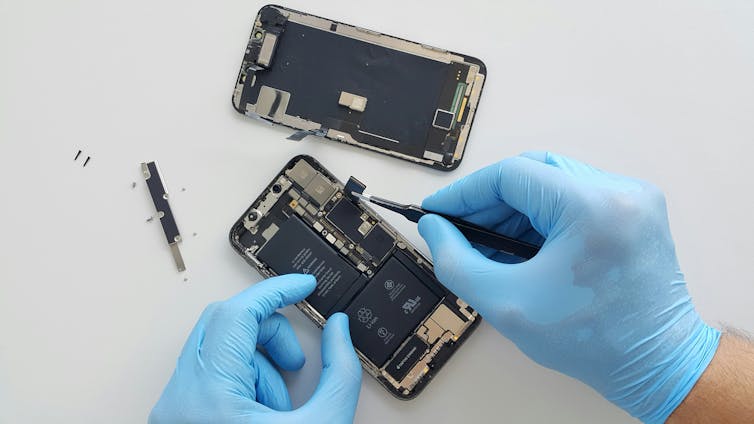
Photo by Vitalijus on Unsplash
The scores were first implemented on smartphones and tablets, and the next step was to identify priority areas for future use of the instrument. This included appliances like coffee machines, vacuum cleaners and printers.
At the JRC, we also adapted this methodological framework to cover batteries. This provided the technical basis for replaceability requirements under the Batteries Regulation.
The free EU database that tells you if an appliance is actually green
Influencing designs
Consumer needs are not limited to repairability – products must also be reliable, safe and efficient. But with the new regulatory framework in place, product designers already seem to be turning market signals into innovation.
Since the rules for smartphones and tablets were adopted, the impact on the market has become evident: from glue-free screens and electrically-released adhesives, to back covers that pop open with the turn of a screw. These new models demonstrate how creative innovation need not compromise on safety, waterproofing or performance.
Innovation also crosses over to other kinds of products. Laptops, for instance, are especially prone to accidental drops and liquid spills. Some new models now feature swappable keyboards, batteries held in place by a few easily loosened screws, or upgradeable storage and memory.
Wearables pose a challenge to repairability, mainly because of their size and direct contact with the body. But there too, creativity has already been put into practice. This includes a wireless earbud battery that can be removed by hand in seconds, or a smartwatch that comes with accessible components and repair instructions while maintaining its water-proofness.
In the handheld games console sector, manufacturers have recently announced design changes specifically to comply with new EU rules and to ensure access to the EU market.
The aim of these rules is not to prescribe every detail of how a product should be designed, but to provide an innovation pathway towards positive societal impact. Paired with a robust, research-based methodological foundation, they are already reshaping product design innovation.
The intended outcomes are in line with Dieter Rams’ vision, and champion the benefits of a circular economy: less waste and fewer emissions, cost savings for consumers, and new business opportunities for manufacturers and repairers.

A weekly e-mail in English featuring expertise from scholars and researchers. It provides an introduction to the diversity of research coming out of the continent and considers some of the key issues facing European countries. Get the newsletter!