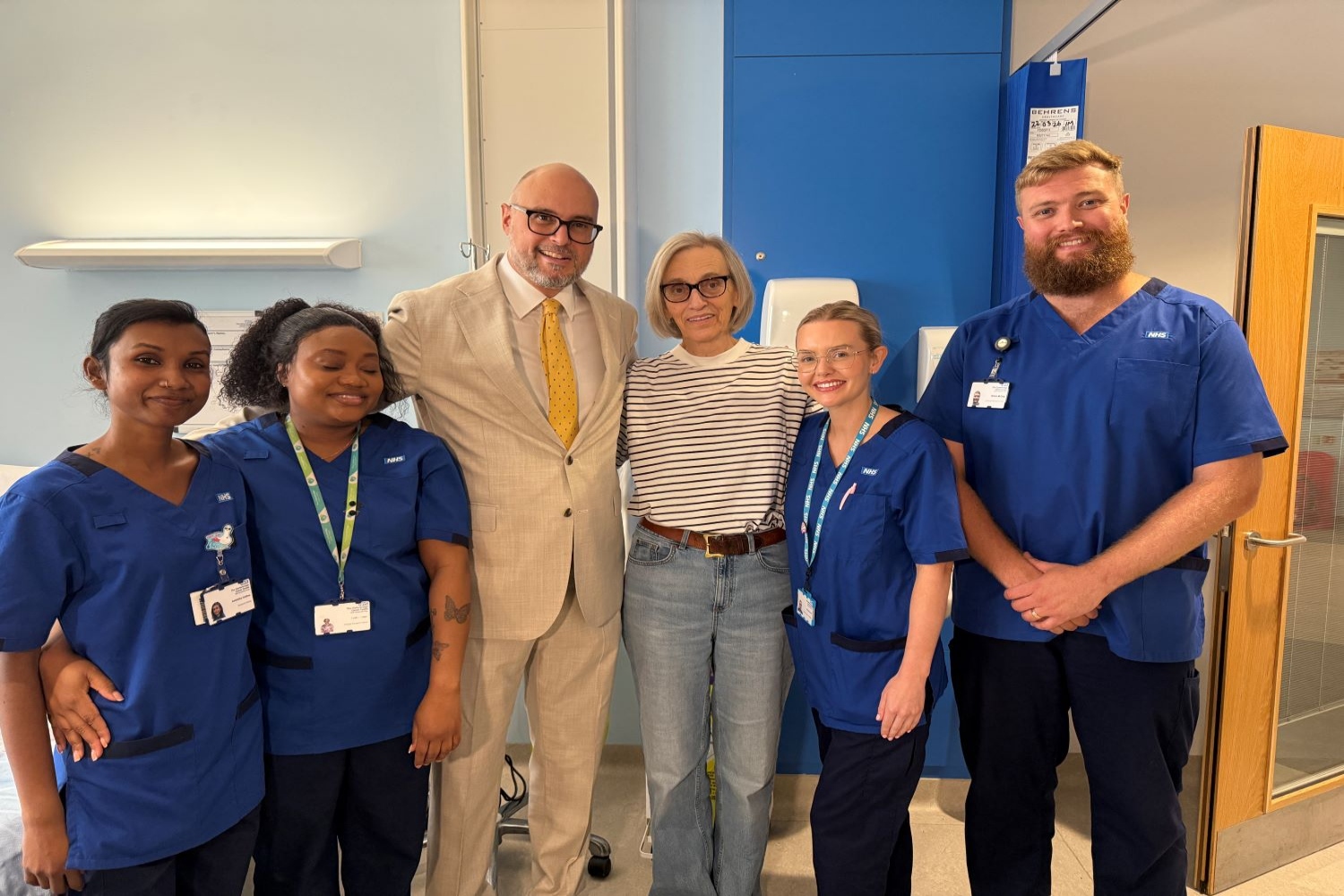
Clinicians and researchers are studying the tailored vaccine, designed to match the unique genetic changes found in patient Chris Jones’s tumour in this early-stage clinical trial.
Chris, who lives in Hoylake, on the Wirral, has advanced lung cancer that has only partially responded to standard immunotherapy treatment.
It is hoped the vaccine will boost her immune system to recognise tumour cells and attack them after searching them out in her body.
This will help her benefit from treatment for longer.
The trial
The trial, publicly funded by MRC, will involve ten participants with advanced non-small cell lung cancer.
It will be overseen by clinicians and scientists at the Clatterbridge Cancer Centre (CCC) and the University of Liverpool, including the Liverpool Clinical Trials Centre.
In the UK, around 50,000 people are diagnosed with this type of cancer each year, with two million cases globally, making it the third most prevalent cancer in the world.
The trial will assess safety and look for early signs that the personalised vaccine might trigger an immune response against this common cancer.
‘Doggybone’ DNA
Advanced computational technologies, developed by biopharmaceutical company myNEO, identify which tumour-targets the immune system should be aimed against to strengthen the anti-tumour immune response.
These targets are manufactured into a vaccine with the use of an innovative cell-free manufacturing method to make DNA known as ‘doggybone DNA’ (dbDNATM).
This technology allows researchers to produce personalised vaccine components rapidly and at a lower cost than more traditional methods.
Chris’ experience
Chris was referred for tests last year by her GP following a persistent cough and breathlessness.
Her father and grandfather died from lung cancer and her worst health concerns were confirmed when she, too, was diagnosed with the disease.
Chris was given immunotherapy but it was not tackling the disease, and she was offered the opportunity to join the NEOVACC clinical trial.
Her family
Chris runs gelato and coffee shop Churn & Chill with her daughter Phoebe and has been working throughout her treatment.
Chris’s first daughter, Alex, died in 2016 from breast cancer aged just 26, three years after her diagnosis.
Alex spent those years raising money for cancer charities and working with the CoppaFeel! educational organisation, raising awareness of self-checking to aid early diagnosis of cancer.
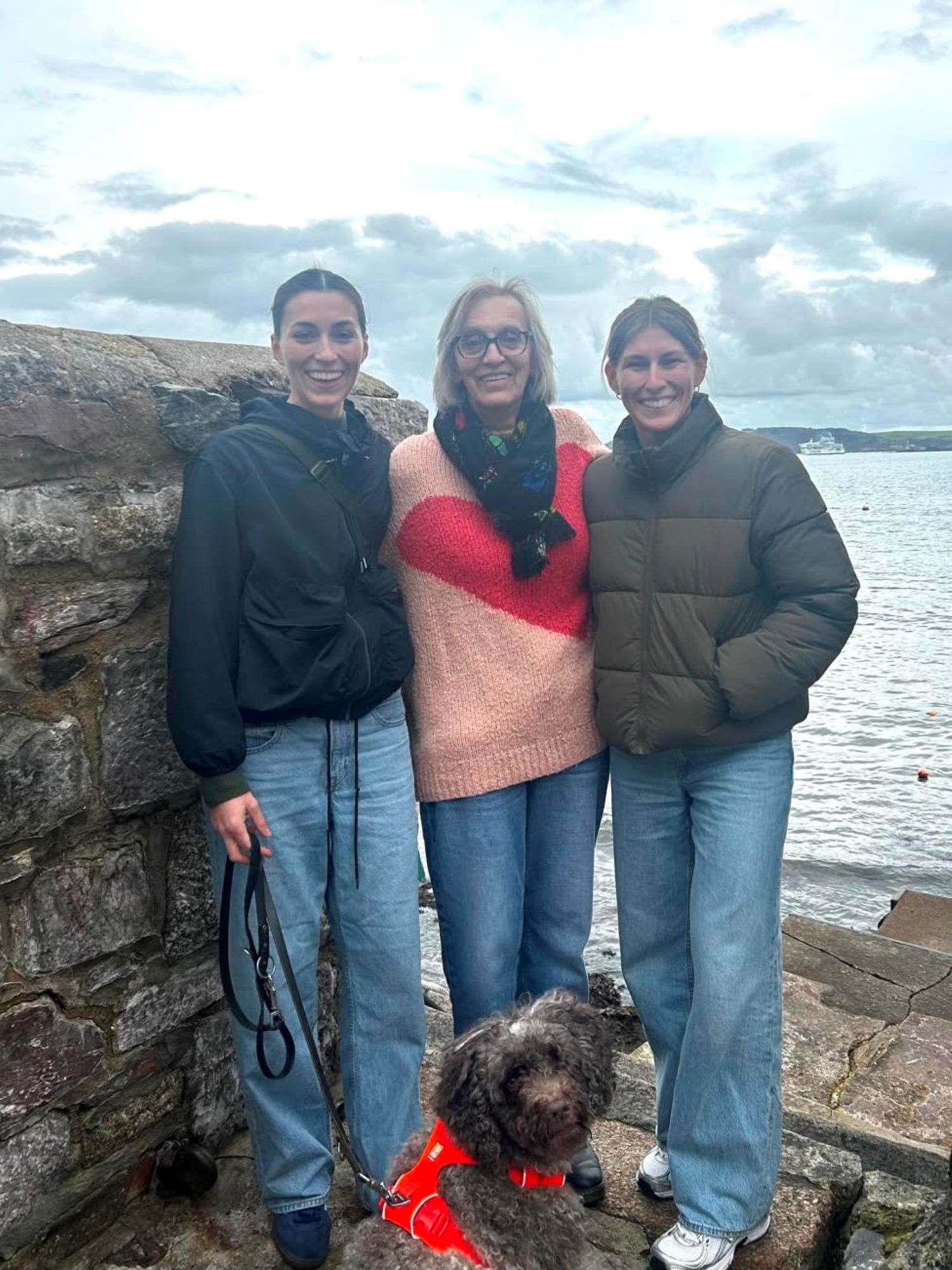
Chris Jones with daughters Phoebe and Grace Credit: Chris Jones
Vital research
Chris said:
Alex raised a lot of money for cancer research, so I knew how important research was in the battle against cancer.
The trials team said I was an ideal candidate for this study, so I didn’t hesitate when they asked if I wanted to take part. If there was a possibility of me surviving longer, I was happy to be involved with it, and if there is a chance of it helping other people in the future, then that was even better.
This type of research is very new but could add a new range of treatments to what patients are given already, and it could also give me a chance.
Perhaps in the future patients with the type of breast cancer that Alex had could benefit from this new therapy. Alex was unable to join a clinical trial, so if this research could help someone in her position in the future, then that would be really positive.
Vaccine
Chris was given her first round of the cancer vaccine at Clatterbridge Cancer Centre, Liverpool, using the Pharmajet’s Stratis system, a needle-free injection.
This enhances DNA cancer vaccine performance through optimised delivery to the muscle.
She will receive further doses of it over several months alongside standard immunotherapy treatment.
Public investment
Sophie Mountcastle is Translation Programme Manager at MRC, which provided a £2.66 million grant from their Proof of Concept scheme.
She said:
The first UK patient receiving this personalised cancer treatment is a great example of what public investment through the MRC can achieve.
This pioneering clinical trial is developing a therapeutic vaccine designed to stimulate the immune system to recognise and attack tumour cells based on the tumour-specific genetic changes that make each patient’s cancer unique; offering a potential new approach for patients who do not fully benefit from existing immunotherapies.
By bringing together researchers, NHS clinicians, and industry partners, we’re helping to translate scientific discoveries into potential new treatments for patients, while advancing the next generation of personalised cancer treatments.
Collaboration
Foundations were laid for this breakthrough through previous MRC funding into DNA-based cancer vaccines in collaboration with Torchlight Genetics.
dbDNA is provided by UK-based Touchlight, the market leading synthetic DNA provider, which uses enzymes to amplify DNA efficiently in a laboratory setting, simplifying production.
The CCC researchers believe the inclusion of the dbDNA technology will, in future, play an important role in making personalised cancer vaccines capable of delivery at scale.
This study is led by Professor Christian Ottensmeier, CCC Consultant Oncologist, and Professor Natalia Savelyeva, both part of the University of Liverpool’s Institute of Systems, Molecular and Integrative Biology.
A new approach
Chief Investigator Professor Ottensmeier said:
This personalised approach could offer hope to those for whom standard immunotherapy has not fully worked, by helping the immune system recognise and fight the parts of the tumour that have previously evaded detection.
I hope this research will contribute to new ways of thinking about cancer vaccine use in advanced lung cancer.
We are excited to be using ‘doggybone’ technology in the creation of this vaccine, which has the potential to be a gamechanger in reducing the speed and cost of production of these important therapies.
Exciting potential
Professor Savelyeva said:
It is a very exciting study because, if successful, this strategy could benefit more than half of patients with advanced lung cancer, and possibly those with other types of cancer as well.
Tailored treatments
Dr Jill Makin, Chief Scientific Officer, Touchlight Genetics Ltd:
We are very excited to work with Profs Ottensmeier and Savelyeva. The doggybone DNA technology provides an ideal means to deliver rapid individual personalised vaccines to this large group of patients with an unmet clinical need and other patients with solid cancers.