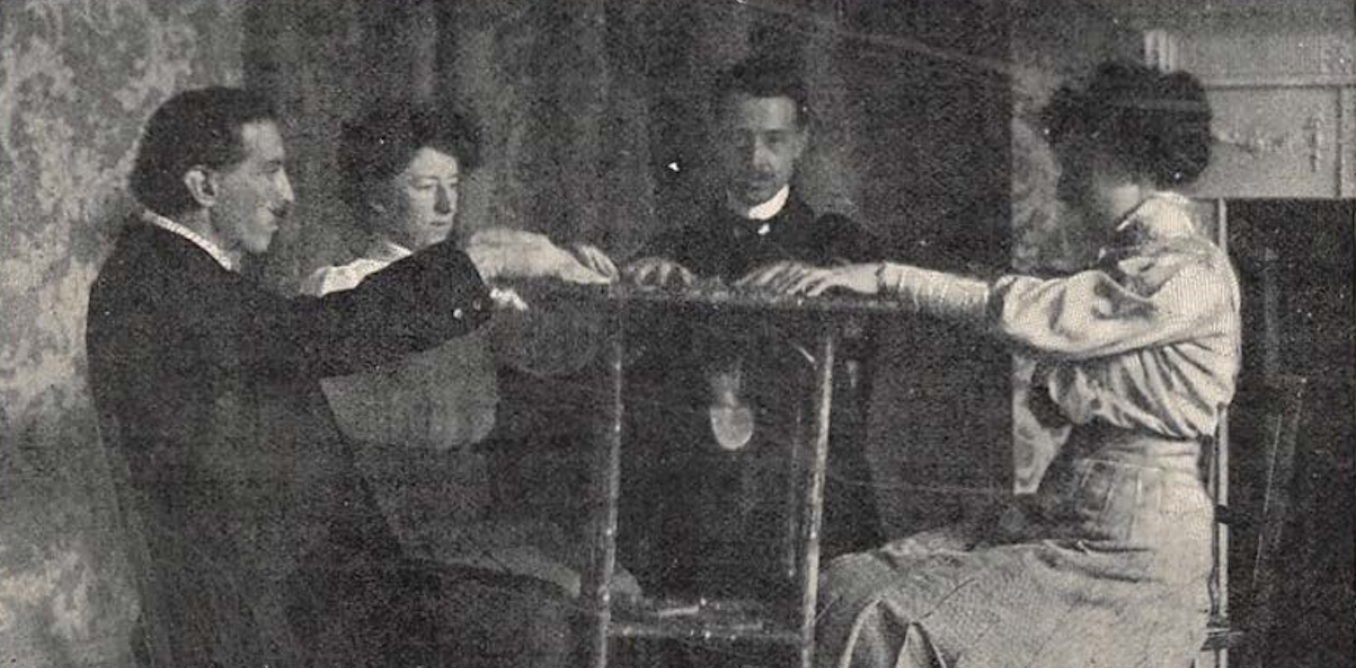
In November 1857, during a séance in Jersey City, the medium Leah Brown claimed her body produced luminous particles. So intense was the luminosity emanating from her, she recalled in her memoir, that it almost burned her hands. She rinsed her hands under a tap and then pushed them into the damp earth outside.
The following evening, luminous particles were discovered in the soil where she’d pressed her hands. They were later identified as phosphorous. In her memoir, Brown admitted to the presence of phosphorous but insisted her body had produced it.
She further claimed that the manifestation of spirits in the body naturally produced “phosphoric lights” and the particles came naturally from her body. She added that mediums’ bodies could produce phosphorous and implied that they were part of what was then known as ectoplasmic remains — the viscous, gauze-like substance historically claimed by 19th- and 20th-century spiritualist mediums to exude from their bodies during trances.
In truth? She’d probably secretly brought phosphorus with her and had used it in the séance. But her account shows how phosphorus was used in séances decades ago — and provides a glimpse of the chemistry behind making the dead seem visible as Halloween approaches.
The dangers of phosphorous
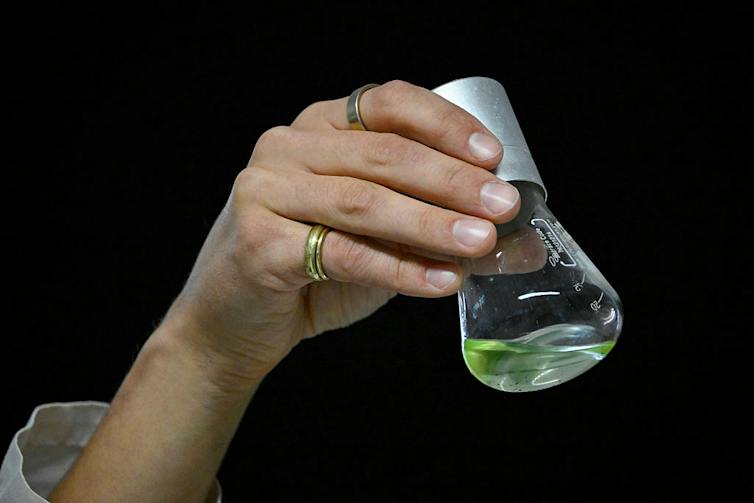
White phosphorus, also called yellow phosphorus, gives off a faint light as it slowly reacts with oxygen in the air. The effect is chemiluminescence, light from a chemical reaction — it’s not evidence of supernatural energy.
In a dark room, the glow could indeed be rather uncanny and convincing of a phantom presence.
Phosphorus is not a safe chemical. It’s toxic if swallowed and inhaling the fumes too can be harmful. It’s unclear whether those living in the Victorian era knew about these dangers or if they had any knowledge of the dangers of phosphorous.
(AP Photo/Wally Santana)
White phosphorous was used in “strike anywhere” matches, and many people — mostly women — working in factories where it was used developed a disease called phossy jaw. It affected teeth and jawbone.
Certainly, long-term factory exposure is not comparable to séances, and we don’t have any definitive evidence of mediums suffering from this disease, but what’s relevant here is that white phosphorus was a known industrial poison and yet it was used regularly for seances.
Nonetheless, a glowing ghost was not always a toxic ghost. In 1910, the magician William Marriott demonstrated how spirit hands could appear with some props and luminous paint.
In 1877, William Henry Bailman’s luminous paint used calcium-sulphide and became a major commercial success. This compound could absorb light and glow in darkness.
Ties between sciences and spiritualism
Historian Richard Noakes’ work has shown physical sciences had a difficult yet symbiotic relation with spiritualism. Bailman’s paint is an example that ghost-making was part of a broader culture of chemical experimentation.
In 1874, William Crookes, a renowned chemist, investigated self-luminous objects at séances. He specifically tested phosphorised oil and phosphorous lamps to see if he could understand the process better.
Yet Crookes did not dismiss spiritualism as complete hoax. His writings suggest sciences and spiritualism were not completely separate worlds, and their methods sometimes overlapped.
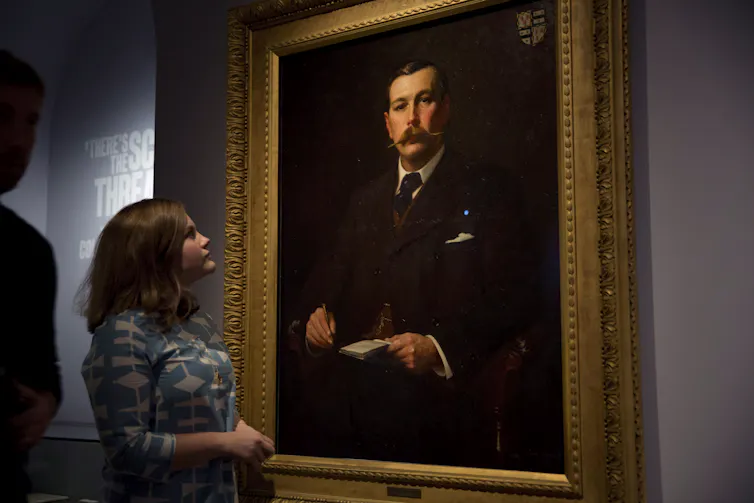
It’s important to examine the role literature played in understanding the link between phosphorus and ghosts. The most famous literary example of the use of phosphorus for ethereal spectacle comes from Arthur Conan Doyle’s The Hound of the Baskervilles, where the dog is treated with phosphorous to create the ghostly effect.
Doyle’s work had profound impact on the development of forensics. The fictional use of phosphorous to create a spectral hound very likely brought more attention to the use of phosphorous within the spiritualist community.
Ironically, the Scottish author had a keen interest in the paranormal and wanted to believe that ghosts existed. It’s strange how the creator of world’s most popular rational detective — Sherlock Holmes — was so deeply invested in the supernatural.
(AP Photo/Matt Dunham)
Disposable bodies
More recently, British author Laura Purcell’s Gothic novel, The Shape of Darkness, deals specifically with mediums and their use of phosphorus.
Purcell’s novel is about a poor child medium who is unaware that the glow in her body is because of phosphorous and imagines that the burn she feels is because of the spirits.
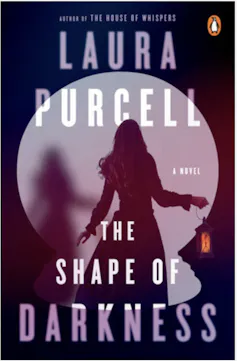
(Penguin Canada)
Her father is suffering from phossy jaw from his work at a match factory, and the book focuses on the inescapable nature of poverty and how the child is now the family’s only source of income.
In both Purcell’s novel and The Hound of the Baskervilles, toxic phosphorous is used on subjects without any agency. The victims, a dog and a child, suffer health hazards just to create a supernatural phenomenon. Both these works of fiction give voice to a very real issue — some bodies have always been considered more disposable than others.
Our Halloween decors today are filled with spooky things that glow.
But once upon a time, a mysterious glow held the promise of extraordinary proof that the dead had returned for those gathered in darkness. Séances claimed to dissolve the boundaries between the dead and the living. And while we may continue debating whether ghosts are real, that spooky light in the dark decades ago was certainly not supernatural.