
A suspected case of H5 bird flu has been detected in a giant petrel found near Hawks Nest on the mid-north coast of New South Wales, marking the first time the virus has turned up in a wild bird in the state.
Samples returned a positive result in preliminary tests, and have been sent to the Australian Centre for Disease Preparedness for confirmation. The detection comes at the same time as another unconfirmed positive result in Western Australia.
If confirmed, these will be Australia’s sixth and seventh detections of the highly pathogenic H5 avian influenza in less than three weeks, following earlier cases found in wild birds in WA and South Australia since June 14.
Until then, Australia was the only continent to have avoided the strain, which has devastated birds and marine mammals worldwide due to its ability to mutate rapidly and jump between species.
Why NSW, and why now?
After earlier detections in WA and SA, the NSW event comes as no surprise. Giant petrels spend winter in Australia’s neighbourhood, scavenging in southern waters where they may acquire the disease and spread it widely.
The immediate response in NSW will mirror what has already happened in the west: heightened surveillance, biosecurity measures on poultry farms, and a public message to avoid approaching sick or dead birds. Instead, they should be reported to the Emergency Animal Disease Hotline (1800 675 888).
NSW Agriculture Minister Tara Moriarty said the detection was “incredibly concerning for both agriculture and for wildlife”, while Chief Veterinary Officer Jo Coombe said the state’s focus was now on early detection, with a State Coordination Centre stood up in Orange and more than 500 additional staff trained for surveillance.
A detection is not an outbreak – yet
A positive result in a wild bird – or even several – does not equal an outbreak. For that, the virus will have to jump into local wildlife populations and start spreading among them.
So far, this has not been observed in Australia. All confirmed cases have been in wild migratory seabirds, with no sign of spread to poultry or native species.
However, this may not last. Overseas, migratory birds have often sparked local oubreaks in new regions. It may only take one transmission event to a local population for the virus to spread quickly over a large area.
Giant petrels are likely to be around southern Australia for another couple of months, so further detections through winter can be expected.
There is little scope to keep the virus out, even for states with no detection so far. The wild animals that carry it are beyond our control.
The priority instead is making sure Australia is prepared for any outbreak that does occur. Australia has had a national response plan for this eventuality since 2024, alongside a strategy for monitoring wildlife and poultry, biosecurity guidelines and outbreak exercises.
Bird flu is deadly for backyard chickens – and even cats. A vet expert explains
Seals at risk too
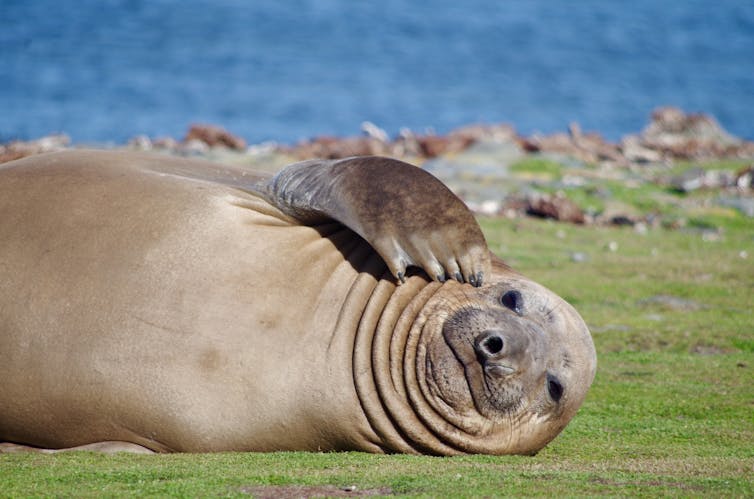
One risk that hasn’t been getting much attention is the threat to marine mammals such as seals. NSW is home to fur seal populations, and overseas experience shows H5N1 can be catastrophic for seals.
A 2023 outbreak in Argentina may have killed more than 17,000 southern elephant seal pups, with mortality rates above 90% in some colonies. Tens of thousands of sea lions in South America also died of the disease in 2022–23, and elephant seal outbreaks saw beaches closed in California earlier this year.
Seals can be infected through contact with infected birds or contaminated water, and their dense breeding colonies create ideal conditions for rapid spread of the virus. As Australia’s case count grows, coastal seal colonies may warrant as much attention as poultry farms.
marenmei/iNaturalist, CC BY-NC
What happens now?
For now, authorities will remain on high alert and stand ready to execute their plan as and when outbreaks occur.
The message to the public remains the same as it has been since the first detection in June: don’t approach sick or dead wildlife – but do report it, and let authorities do the testing. And if you have chooks in your backyard, keep a close eye on them.