– Advertisement –
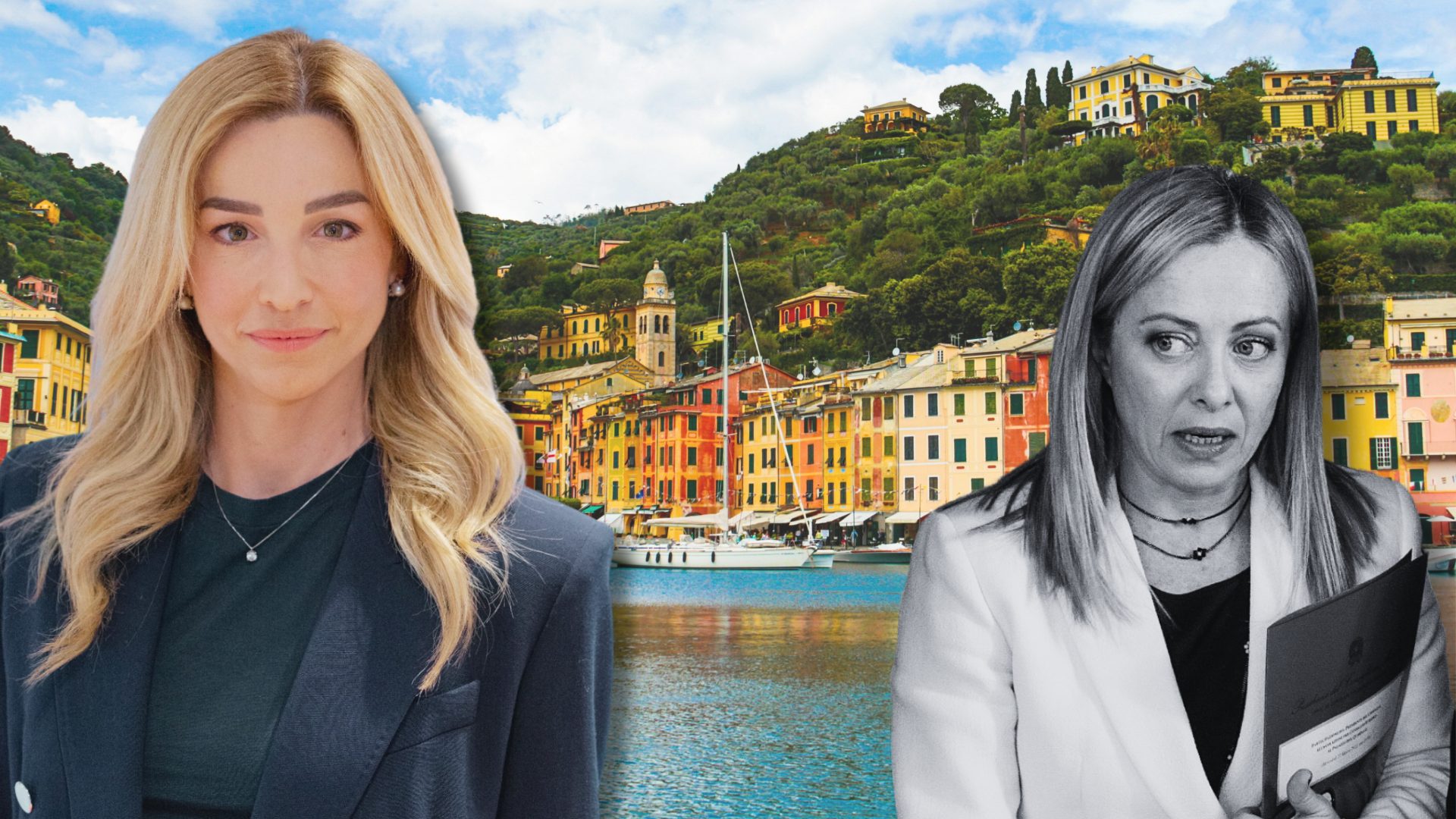
Since 2022, Giorgia Meloni has led Italy’s most stable government in decades. Despite social cuts and authoritarian policies, the opposition has so far been unable to find a way to challenge Meloni’s right-wing coalition. Last year in Genoa, Italy’s sixth-largest city, former Olympic hammer thrower Silvia Salis demonstrated how an independent candidate, backed by a centre-left alliance, could oust a right-wing city government after eight years in power. The mayor is now seen as a left-wing anti-Meloni figure who could stand against the prime minister in 2027.
Georgia Meloni began her political career in the youth wing of the Movimento Sociale Italiano, a party founded in 1946 by former supporters of Mussolini. Her current party, Fratelli d’Italia, later emerged from this post-fascist tradition. Since 2022, it has governed in coalition with Matteo Salvini’s right-wing populist Lega and the conservative Forza Italia, founded by Silvio Berlusconi. In the European Parliament, the Lega sits alongside the FPÖ in the Patriots for Europe group.
The coalition in Rome is pursuing a hard-line right-wing agenda: it is cutting social benefits, tightening immigration laws, restricting the rights of same-sex couples, seeking to amend the constitution so that the head of government is directly elected, and aiming to weaken judicial oversight.
For a long time, Meloni seemed unbeatable. In a controversial constitutional referendum in March 2026, around 54 per cent voted against her judicial reform. It was her first major defeat since taking office. Meloni has ruled out resigning and intends to continue governing. Her image as the unbeatable leader has been tarnished. Within the divided opposition, hopes of an election victory are growing.
Silvia Salis secures election victory in the former left-wing stronghold
In this situation, the spotlight falls on a woman who, just over a year ago, had hardly any political experience. Silvia Salis grew up in Sturla, a working-class neighbourhood in Genoa. Her father was a groundskeeper at a municipal sports ground and a member of the Communist Party; her mother was a local council employee.
Even as a child, she took up athletics through her father’s sports ground and later specialised in the hammer throw. She won ten Italian championship titles, took gold at the Mediterranean Games and competed in the Olympic Games twice. She ended her career in 2016 following an injury. She moved into an administrative role at the Italian Olympic Committee (CONI), where she most recently served as vice-president.
In May 2025, Salis won the election in Genoa with 51.5 per cent of the vote against the candidate of the right-wing coalition, thereby ending eight years of right-wing city government. She stood as an independent candidate, backed by an alliance comprising the social-democratic Partito Democratico, the Movimento 5 Stelle, the Greens and smaller centre-left lists.
Salis has enforced a minimum wage, backed workers’ strikes and supported families with lesbian parents
Salis has pushed through measures that would never have stood a chance under the previous right-wing government. Since then, companies awarded municipal contracts have been required to pay their employees at least nine euros an hour.
In November 2025, she backed the strikes by workers at the former ILVA steelworks in Cornigliano, who were protesting against impending plant closures and mass redundancies.
Furthermore, under Salis, the city officially recognised eleven children from families with two mothers. This was made possible by a ruling of the Constitutional Court on dual motherhood; politically, however, the move in Genoa also signalled a change of course from the previous right-wing city government. In addition, the city opened an office for LGBTQIA+ rights.
Salis gained wider recognition in April 2026. In 2022, one of Meloni’s first acts in office had been to ban illegal raves. Salis invited the Belgian DJ Charlotte de Witte to Genoa and had her perform for free in Piazza Matteotti in the city centre. More than 20,000 people attended the open-air concert.
Neck and neck with Meloni: poll gives Italy’s left new hope
According to a poll by the Noto Institute, a list headed by Salis would secure 6.5 per cent of the vote. This would put the centre-left bloc, with 45.5 per cent, almost neck and neck with Meloni’s right-wing alliance, which stands at 46.8 per cent.
Salis herself is keeping her options open regarding a candidacy. It is not yet clear how a joint candidate for the centre-left parties is to be determined. Salis rejects the idea of a primary and points to agreements between the parties.
Post Views: 53
– Advertisement –