– Advertisement –
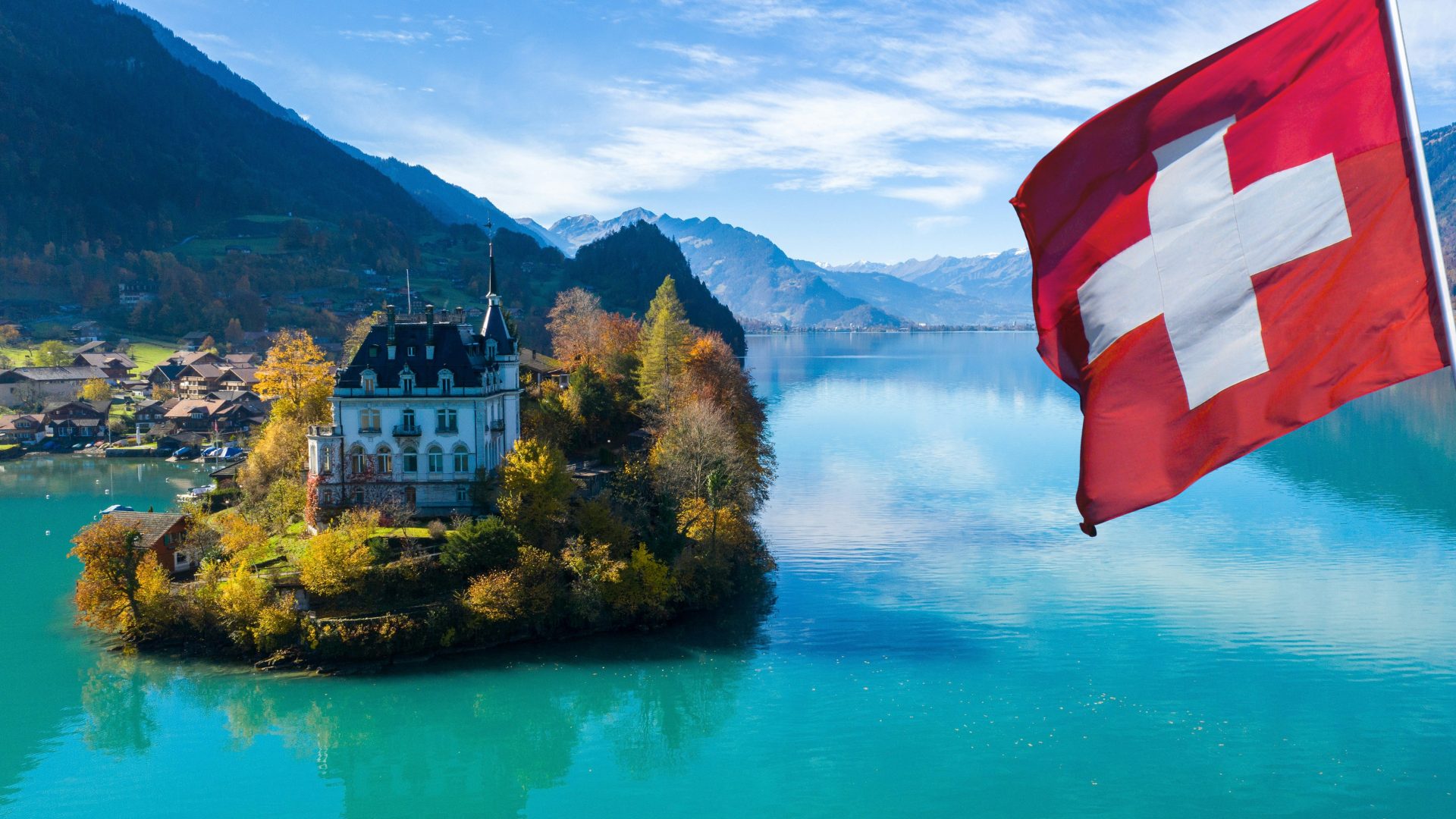
Whilst a wealth tax has been the subject of debate in Austria and many other EU countries for years, in Switzerland it has long been an integral part of the standard tax system. Its origins date back more than 200 years. Today, all cantons levy a wealth tax, and the municipalities are also involved. The tax rates vary considerably, but are all below one per cent. Nevertheless, the tax generates around 9 billion Swiss francs (9.6 billion euros) each year.
The wealth tax has existed in Switzerland for more than 200 years
The wealth tax has a long history in Switzerland. As early as the time of the Helvetic Republic around 1800, there was an attempt to establish a uniform Swiss tax system, including a wealth tax. When the cantons (similar to federal states) regained their tax sovereignty a few years later, some of them retained taxes from that period – including the wealth tax.
It became even more important following the founding of the modern Swiss federal state in 1848. At that time, customs revenue went to the federal government. The cantons therefore had to rely more heavily on other sources of revenue – primarily income and wealth. Over the course of the 19th century, wealth taxes consequently came to play a ‘dominant role’.
From 1941 to 1958, wealth was also taxed at federal level: the ‘Wehrsteuer’ (defence tax) of the time was an income tax supplemented by a wealth tax. At cantonal and municipal level, however, wealth taxation remained in place.
All 26 cantons levy a wealth tax
Today, the federal government does not levy a tax on the wealth of natural persons. However, it requires the 26 cantons to levy such a tax. The cantons themselves can determine the actual tax rates and allowances. In addition, each municipality can set a surcharge to determine how much it adds on top of the cantonal taxes. In this way, the revenue from the wealth tax flows not only to the canton but also to the municipalities, which use it to fund roads, local infrastructure or the fire service. This also means that the actual amount of tax varies from municipality to municipality.
All Swiss citizens with net assets of half a million euros or more are liable to pay tax
In principle, all assets minus liabilities are subject to tax, including, for example, bank balances, cash, shares and securities, property, and assets tied up in a business. Assets held abroad must also be declared. Household goods and personal effects, however, are exempt. As in Norway, wealth tax in Switzerland is calculated as a matter of course each year via the tax return. Assets are generally valued at their current market value – that is, at the price that could be realised in a normal sale.
However, each canton has tax-free allowances that vary considerably. In 2024, a married person with no children became liable for wealth tax if their net assets were between 51,000 and 402,000 Swiss francs.
“Wealth tax in Switzerland is levied at cantonal and municipal level. There are deductions, for example for children, tax-free allowances and, in some cantons, a tax-free threshold – but from around 500,000 Swiss francs (approximately 530,000 euros) upwards, practically everyone pays,” writes the Institute for Economic and Social Research.
Tax rates are in the per mille range – but generate more than 9.6 billion euros
Most tax rates are progressive. This means that the higher the wealth, the higher the tax. However, all rates are below one per cent – ranging from 0.13 per cent to 0.86 per cent. The Swiss average is 0.43 per cent.
A tax rate of a few per mille may sound like very little at first. For public finances, however, this adds up to a considerable sum. In 2022, the wealth tax generated a total of 9.015 billion Swiss francs (9.6 billion euros). Of this, 5.536 billion went to the cantons and 3.479 billion to the municipalities.
This represented 10.4 per cent of all tax revenue from cantons and municipalities. As a proportion of the total tax revenue of the Confederation, cantons and municipalities, it amounted to 5.7 per cent. By way of comparison, in Austria, wealth-related taxes account for only around 1.5 per cent of all tax revenue.
A 2023 report by the Federal Council highlights just how important this source of revenue is for the public sector.
Swiss wealth tax does not lead to significant redistribution
In Switzerland, however, the tax does not lead to the redistribution of large fortunes. According to the tax authorities, it is intended “in principle not to encroach on the substance of the wealth, but to be paid out of the income generated by it.”
An academic study therefore describes it as only moderately progressive.
The authors of the study emphasise that, historically, it was not designed to bring about a significant redistribution of existing wealth, but rather to provide stable revenue for cantons and municipalities.
However, this does not mean that the tax has no distributional effect at all. According to the study, a 0.1 per cent reduction in the tax led, five years later, to a rise of just under 1 per cent in the share of wealth held by the richest one per cent.
Wealth taxes therefore do nothing to alter the fact that the richest one per cent of the Swiss population owns just under 46 per cent of total wealth. Indeed, this figure has risen significantly over the last 20 years.
The rights to the content remain with the original publisher.
Post Views: 79
– Advertisement –