
Australia is famous for its coral reefs, including the Great Barrier Reef on the east coast and Ningaloo Reef in the west. Both World Heritage-listed reefs attract thousands of visitors each year.
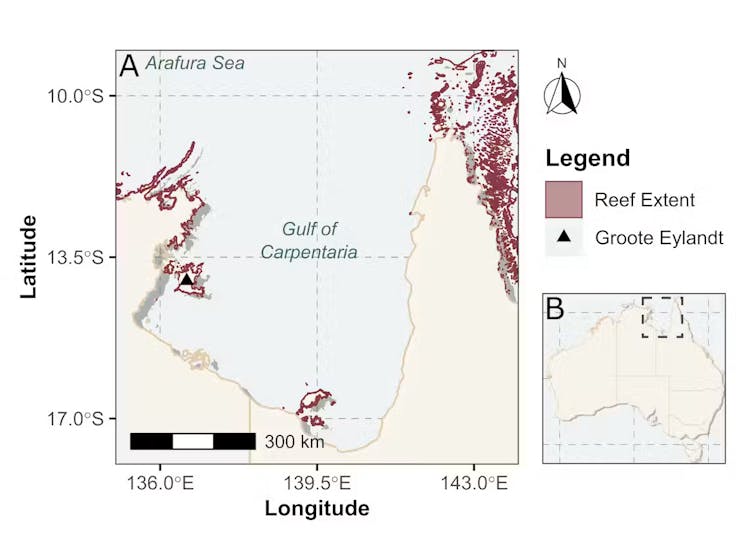
But there’s another vast network of coral reefs in Australia that few people know about. More than 1,000 uncharted northern coral reefs were recently identified using satellite imagery along the north coast of Australia.
Due to the remote location, and the challenge of conducting fieldwork in croc-inhabited waters, these northern reefs have been largely overlooked and understudied. They are deeply valuable to the species that call them home, and the Traditional Owners on whose Sea Countries they lie yet their value to Australia has too often gone unrecognised.
As marine heatwaves and coral bleaching on Australian reefs become more frequent and severe, work to safeguard them must extend beyond iconic systems to include Australia’s northern reefs. Otherwise, we risk losing them – not because they are less important, but because they are largely out of sight and out of mind for many Australians.
Allen Coral Atlas, CC BY-NC-ND
Why Australia’s hidden reefs matter
Coral reefs provide immense ecological, economic and cultural value by harbouring marine animals and plants, supporting fisheries that feed millions of people worldwide, and buffering coastlines from erosion. For Indigenous peoples around the globe, reefs contain culturally significant sites and resources essential for cultural and community wellbeing.
This means reef decline is not only an ecological crisis but a social one, which threatens livelihoods, cultural heritage and fundamental human rights.
The urgency to understand these understudied reefs has never been greater. Following global coral bleaching in 2023–25, which affected 87% of the world’s coral reefs, climate models predict strong El Niño conditions are returning to Australia this summer. We can expect warmer ocean temperatures and a heightened risk of coral bleaching.
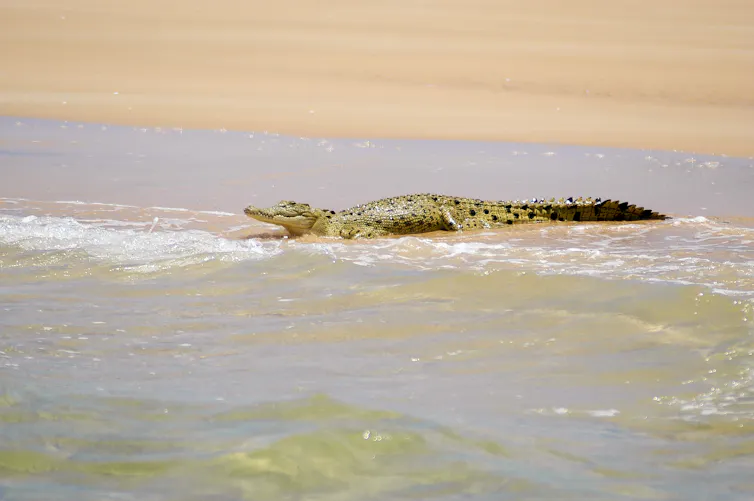
Xavier Hoenner Photography/Getty
Climate change is changing Australia’s reefs, and we must tackle the climate crisis. But, concurrently, we need to give reefs the best possible chance of surviving the changes already underway. Consequently, Australia’s efforts to conserve and restore its reefs will influence the future of many of them. And we face difficult choices about where to direct our limited funding and subsequent conservation efforts.
In recent months, an additional A$91.8 million of federal funding has been announced to protect the Great Barrier Reef. And the Western Australian government has launched an $11 million coral regeneration and enhancement program for Ningaloo Reef and Exmouth.
But Northern Territory reefs have not received the same attention, and when reefs remain excluded from conservation and management decisions they are at risk of silent loss.
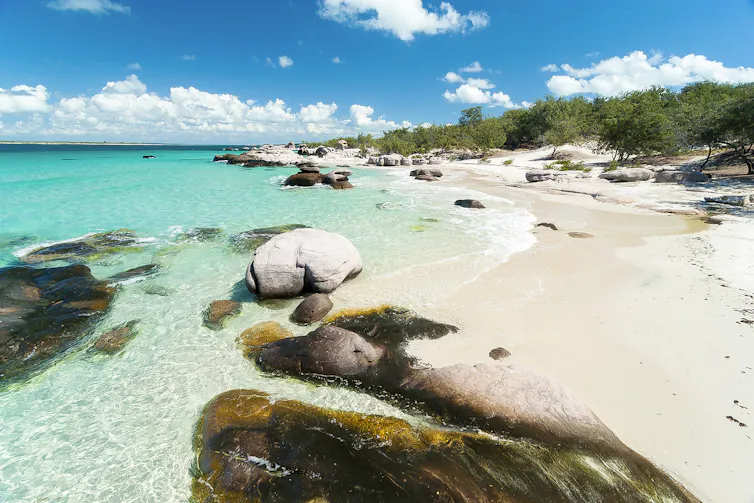
Xavier Hoenner Photography
Silent loss: The case of Groote Eylandt
Our new research, undertaken in partnership with the Anindilyakwa Land & Sea Rangers, merges modern science with First Nations knowledge of Sea Country to document changes to local coral reefs around Groote Eylandt, the largest island in the Gulf of Carpentaria.
Although reefs in this region are estimated to cover more than 3,200 square kilometres, they were only first described in the scientific literature in 2004. For context, more than 5,000 scientific studies have focused on the Great Barrier Reef and Ningaloo Reef, yet fewer than ten have examined reefs in the Gulf of Carpentaria, and none have focused on the corals themselves.
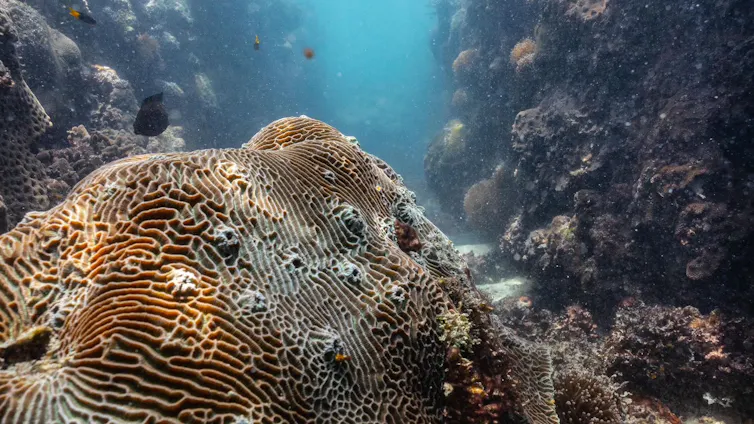
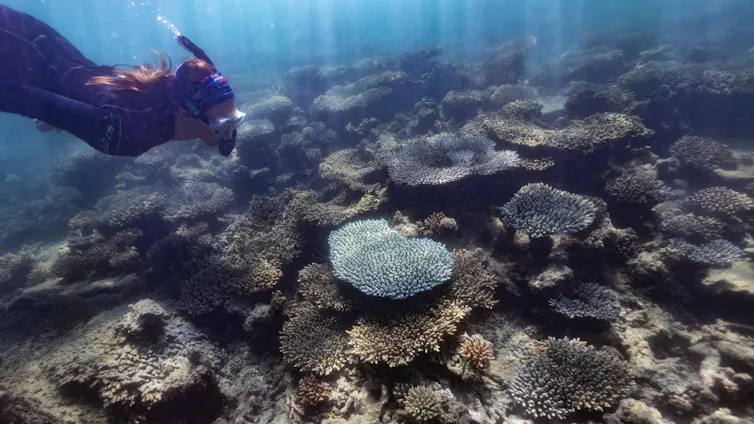
Working alongside the Anindilyakwa Land & Sea Rangers, we surveyed five reef sites around Groote Eylandt and observed coral cover on the reefs ranging from 5–47%. These sites shared the characteristics of some of the world’s most marginal reefs, where tougher coral species have persisted.
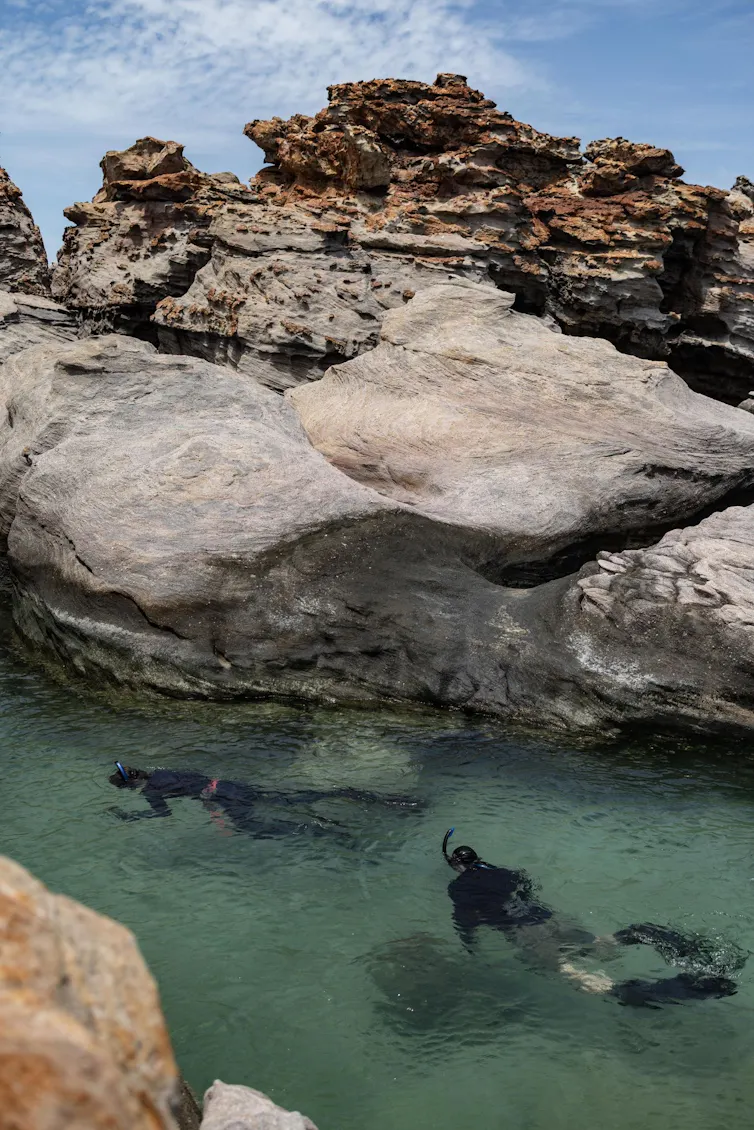
Hadley England
Massive, slow-growing species dominated, while fast-growing branching corals – which create much of a reef’s three-dimensional structure – were rare or absent. Without historical monitoring, we do not yet know if these branching corals have always been scarce, or whether past disturbances, such as bleaching or cyclones, have driven their decline.
Our work also documented significant coral bleaching in February 2024, which may otherwise have gone unrecorded. It was only detected because of our strong partnership with the Anindilyakwa Land & Sea Rangers, whose stewardship was expanded to include visual inspections of the local coral reefs. This enabled us to identify and document bleaching.
This shows designing scientific projects with local knowledge is essential for understanding remote reef systems, which have historically received scant scientific attention.
Hadley England
We need to know more
Remote, understudied Australian reefs are just as vulnerable to climate change as other, better-known and celebrated reef systems.
Given their immense value, particularly for Traditional Owners like the Anindilyakwa peoples, more research is needed to understand their changing ecology.
Without long-term monitoring and local expertise, Australian scientists are unable to track how these reefs are changing, or make wise decisions about their conservation.
Hadley England