
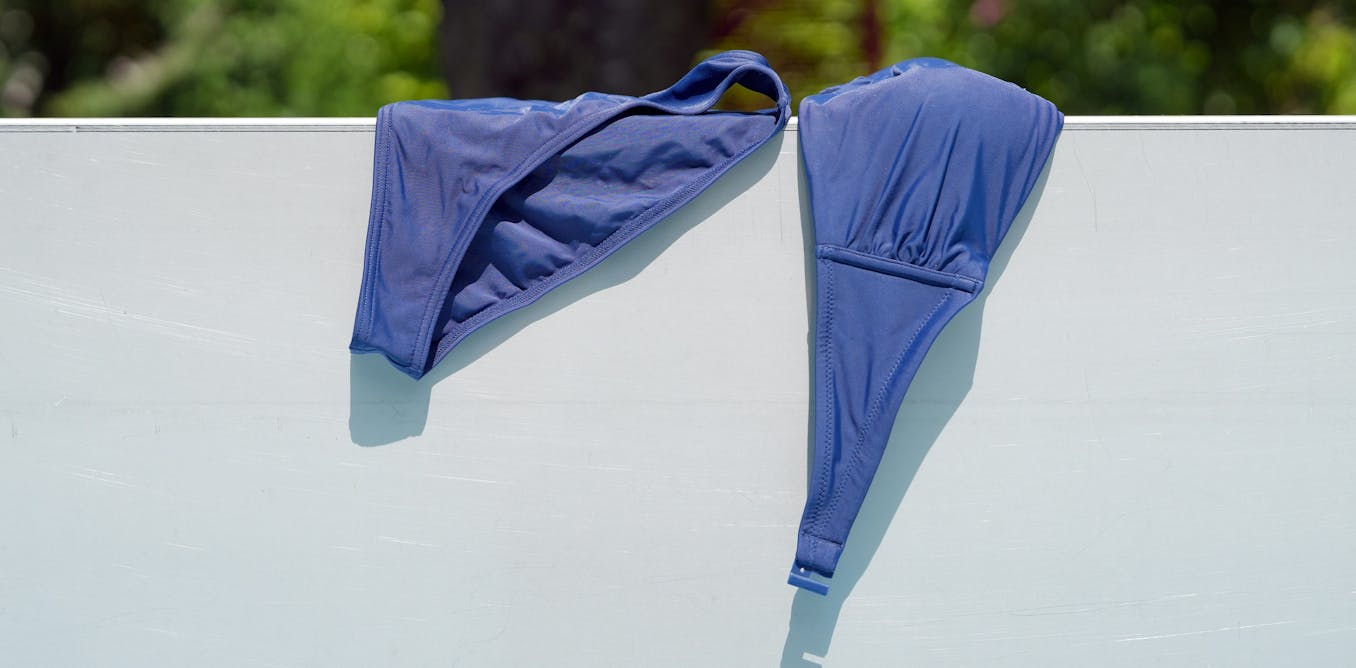
Summer means sunshine, beach days, and afternoons by the pool … which means wearing swimwear and looking after it. But while we enjoy those carefree summer days, pool chemicals, UV rays from sunlight, sweat and salt water are quietly damaging the delicate fibres of our swimwear.
The good news is a simple habit can make a big difference. You may have heard you should rinse out your swimmers after you’ve been in the pool so they don’t fall apart. Here’s the science behind this advice.
What swimwear is made of
Modern swimwear isn’t just fabric. It’s an engineered material made of a sophisticated blend of synthetic fibres designed to perform under demanding conditions.
It combines polyester or polyamide (typically nylon) with elastane fibres, commonly known by brand names like Spandex or Lycra. Typically, swimwear materials contain approximately 80% polyester or polyamide blended with 20% elastane to provide stretch.
Polyester and polyamide dominate swimwear fabrics because they ensure the swimwear will hold its shape when wet, and dry faster than other types of fabrics would.
However, it’s the elastane that helps to ensure swimwear stays on our body during swimming and lets us move with comfort.
All these fibres respond differently to environmental conditions. While polyester generally resists chlorine really well compared to polyamides, elastane remains the most vulnerable component in any swimwear fabric. At the same time, elastane is absolutely essential for achieving the body-hugging fit that makes swimwear comfortable.
Chlorine, sun and saltwater can all do damage
Pool chlorine might keep the water safe and disinfected, but it wages chemical warfare on fabrics.
Chlorine exposure causes severe and progressive degradation of swimwear materials. After 300 hours of exposure to chlorine and sunlight – equivalent to approximately 35 days of summer – the strength of swimwear fabrics may drop by 65%.
The rate of polyamide (nylon) degradation depends on the acidity of the water, with degradation most pronounced at pH levels below 5.0. This pH sensitivity means pool chemistry matters – improperly balanced pool water will speed up how fast your swimwear breaks down. The acceptable range for pool water pH is between 7.0 and 7.2.
UV radiation from the Sun also increases degradation. Elastane fibres are easily damaged by heat, light, atmospheric contaminants such as humidity, moisture and temperature, and chlorine.
Elastane is known to lose strength when exposed to UV radiation for long periods, and direct sunlight while the garment is drying can break down the fibres, leading to loss of stretch and faded colours.
While saltwater is less damaging than chlorine, it still contributes to fabric degradation over time. High salinity causes oxidation and other chemical reactions, which lead to discoloration and degradation of materials. In synergy with sun exposure, this speeds up fabric breakdown even more.
Kindel Media/Pexels
How can I make my swimwear last, then?
Given the constant contact with chlorine, saltwater and UV rays, proper care becomes essential to extend the life of your swimwear.
The single most important tip for keeping your swimwear in good condition after the pool or the ocean is to rinse it immediately in cold or lukewarm water. This removes chlorine, salt water, sunscreen and body oils that would actively degrade fibres.
Never rinse with hot water, as heat makes fibres brittle and stretches the elastane components.
After rinsing, the best way to wash your swimwear is by hand, with a mild detergent. Avoid highly acidic or alkaline detergents, and never use bleach, as elastane fibres will lose stretch and turn yellow.
Fabric softeners should also be avoided, as they leave a coating that clogs fabric pores, trapping odours and bacteria while also degrading the elastane.
Air-drying is essential to extend the life of swimwear. Dry your swimwear in the shade away from direct sunlight, as UV rays continue breaking down elastane and fading colours even after swimming.
Remember to lay garments flat to prevent the stretching and deformation that occurs when hanging wet fabric.
Finally, never use machine dryers, as heat causes elastane fibres to become brittle, causing swimwear to lose shape and become loose or saggy.
Can swimwear be made better?
You may have seen swimwear marketed as chlorine-resistant, long-life, or made from newer materials such as PBT (polybutylene terephthalate), Econyl, Repreve, FishTale, EcoLux or others.
Although these innovations claim to improve durability and performance, they’re not invincible. Even the best fabrics still need proper care to achieve their longevity potential.
It may not seem like much, but your swimwear is actually a sophisticated piece of textile engineering designed to stretch, support and survive water exposure.
To make it last, treat rinsing as a non-negotiable part of your routine. That quick 30-second habit could help your swimsuit stay bright, stretchy and supportive for many summers to come.