
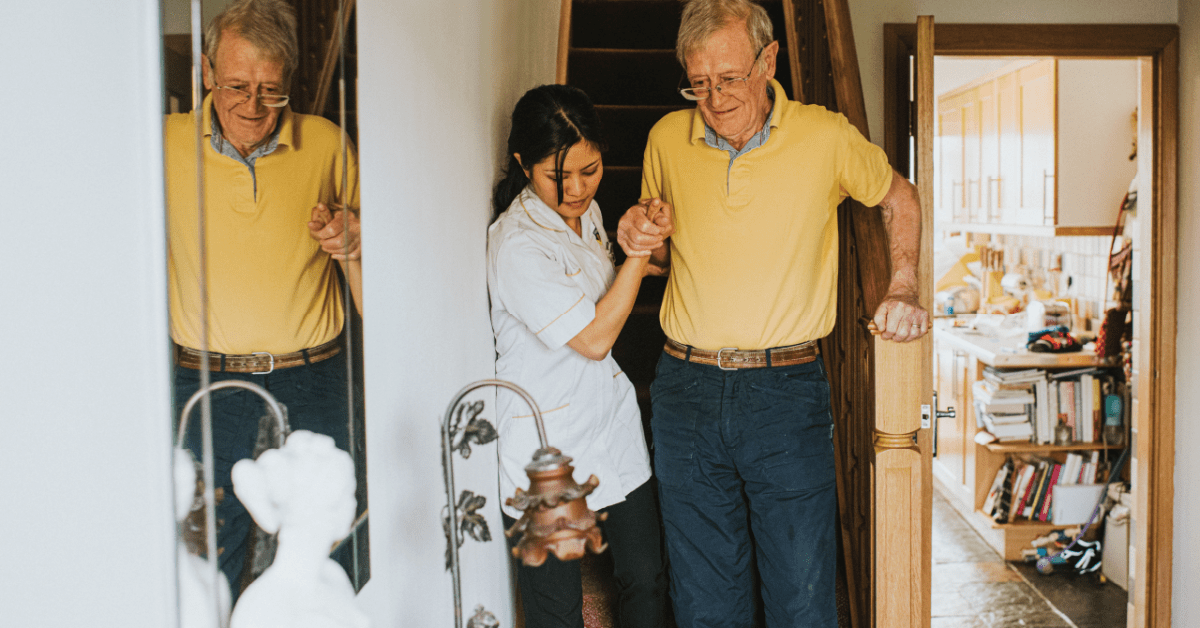
The vast majority of U.S. adults 65 and older (93%) say they currently live in their own home or apartment. Within this group, 9% say someone provides care for them in their home, according to a new Pew Research Center survey that covered topics related to aging and caregiving.
Small shares of older adults say they live in the home of an adult child (2%) or another family member (1%), live in an assisted living facility (1%), or have some other arrangement (3%).
Where older adults would like to live
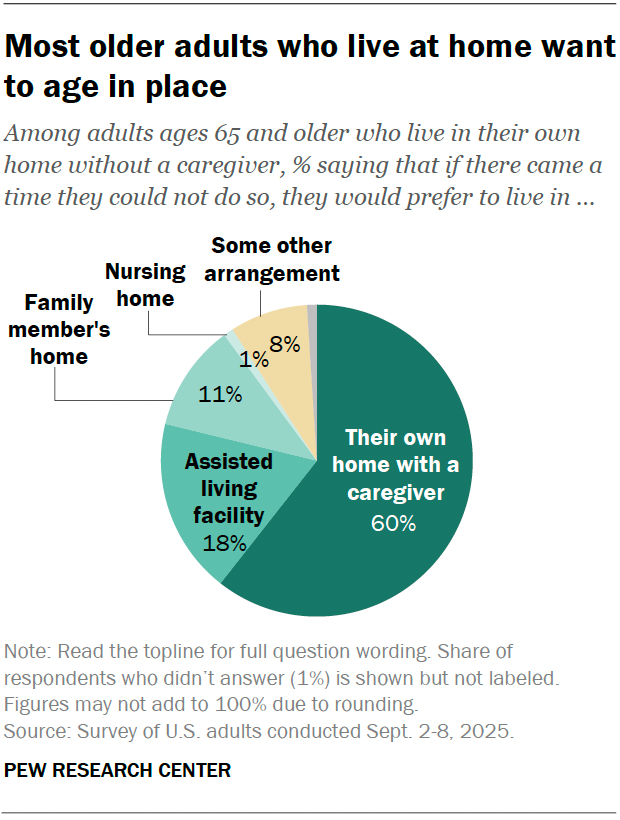
We asked older adults who live in their own home without a caregiver what they’d want to do if they could no longer do so.
Most (60%) say they’d want to stay in their home and have someone care for them. Much smaller shares say they’d want to:
- Move into an assisted living facility (18%)
- Move in with a family member (11%)
- Move into a nursing home (1%)
- Have some other arrangement (8%)
Upper-income older adults are the most likely to say they’d prefer to move to assisted living. About three-in-ten (28%) say this, compared with 19% of those with middle incomes and 13% of those with lower incomes.
Uncertainties with living arrangements
Older adults aren’t entirely confident they’ll end up where they want to be.
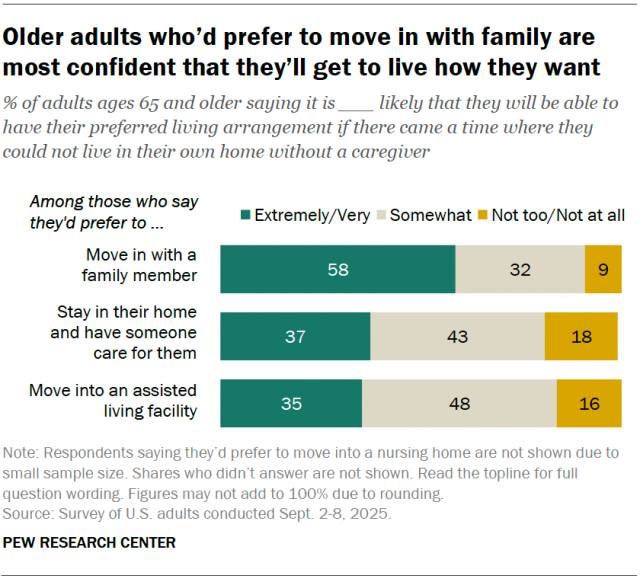
Among those who say they’d want to stay in their home with a caregiver, 37% say this is extremely or very likely to happen. Another 18% say it’s not too or not at all likely.
Those who say they’d rather move to assisted living answered similarly: 35% say this is highly likely to happen, while 16% say it’s not likely.
Older adults who say they’d like to move in with family are more optimistic: 58% say this is highly likely, while 9% say it’s not likely.
Some of the uncertainty surrounding future living arrangements may be related to cost, especially for options like in-home care and assisted living. The survey found that only 21% of adults ages 65 and older have long-term care insurance that would help cover the expense of ongoing living assistance.
Note: Here are our survey questions, the detailed responses and the survey methodology.